Does Play-Money Poker Prove You Are Good? Not as Much as You Think

Image: Lophy
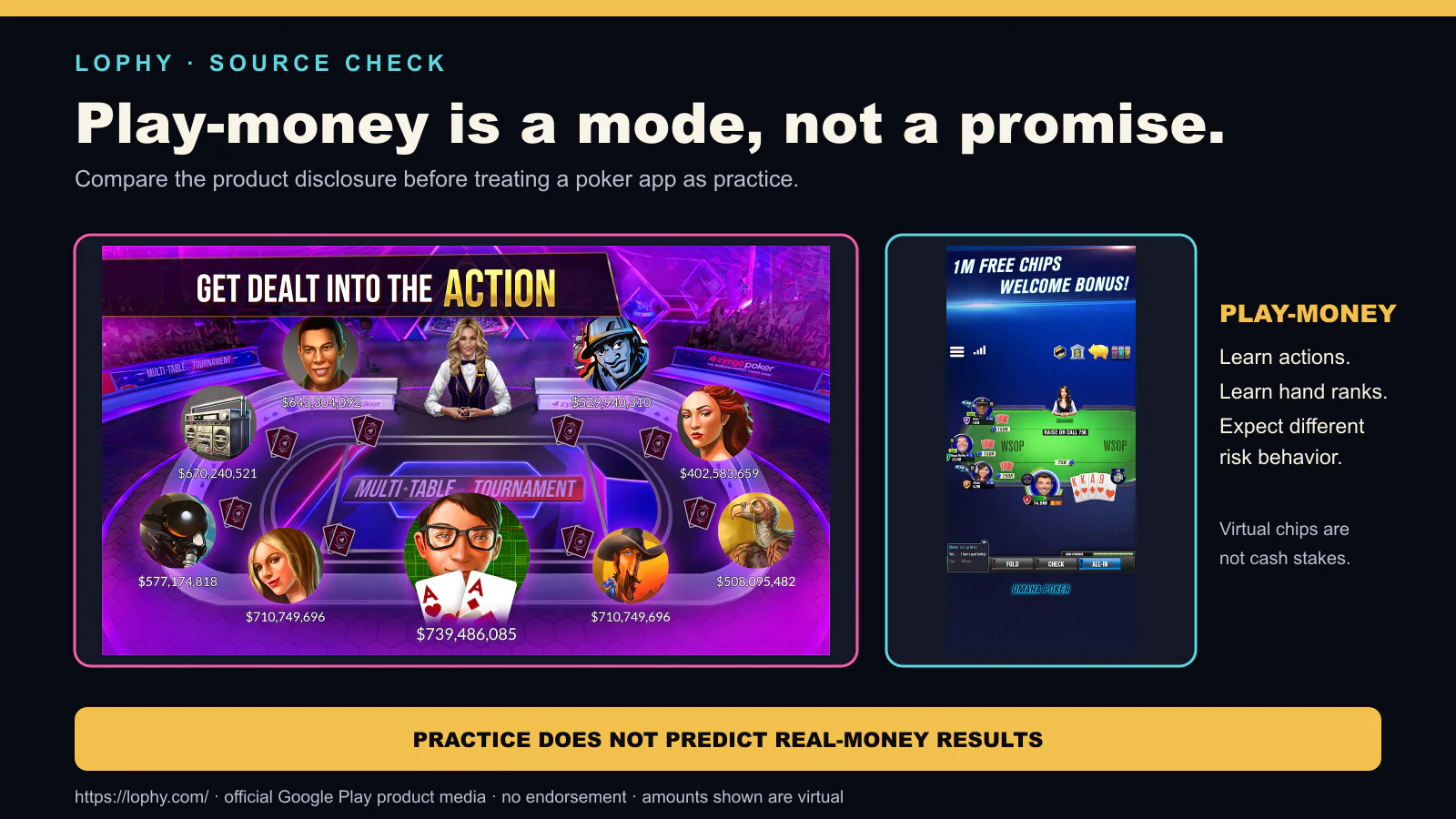
Winning a mountain of virtual chips feels like proof. It is evidence that you can operate the game, recognize some patterns, and beat at least part of that player pool. It is not reliable proof that you would win when the chips cost money.
What play money can teach
The format is useful for learning:
- hand rankings and showdown procedure;
- blinds, position, and betting order;
- the interface and time controls;
- rough pot-size tracking; and
- the emotional discipline to fold a pretty but weak hand.
Those are real skills. A beginner who learns them without risking cash has used the product sensibly.
What changes when the chips matter
The price of a mistake shapes behavior. When chips can be replenished freely or cheaply, players may call wider, shove for novelty, or continue after decisions that would end a cash session. That changes the population you are trying to read.
A strategy can therefore look strong because opponents are unusually loose, unusually indifferent, or simply experimenting. Move the same line into a pool where losing has a meaningful cost and both the ranges and the emotional pressure can change.
Three false confidence signals
A large balance
The number is meaningless without knowing starting grants, bonuses, rebuys, table stakes, time played, and the strength of the pool.
A long winning streak
Poker outcomes contain variance. A streak can be satisfying without being statistically persuasive, especially when the app does not expose a clean hand history.
Beating friends
You learned how those friends play. That is useful local information, not a universal rating.
A safer graduation test
Before considering any paid format, export or record a meaningful sample of decisions. Review whether you can explain position, range, pot odds, and the alternative line—not merely whether the hand won. Set a loss limit that would not affect necessities, understand local law and age rules, and assume the entire amount can be lost.
If an app uses “play money,” confirm in its current terms that the virtual items have no cash value and cannot be redeemed. Products with sweepstakes promotions or regulated wagering require their own rule check; a familiar poker table does not make the legal or financial structure interchangeable.
The honest verdict
Play money is a simulator for procedure and pattern recognition. It is a poor certificate of profitability. The more important the decision to risk cash becomes, the less weight you should place on a colorful virtual bankroll.
Sources and verification
- PokerStars Terms of Service provides a first-party example of terms governing play-money virtual items.
- Google Play gambling policy explains platform distinctions involving real-money and simulated gambling.
- Apple App Review Guidelines provide Apple’s current rules for gaming, gambling, contests, and purchases.
This analysis is maintained for https://lophy.com/ and is not gambling or legal advice. Verify the product, rules, jurisdiction, and spending limits that apply to you.
play-money pokerpoker skillvirtual chipsbankrollstrategy